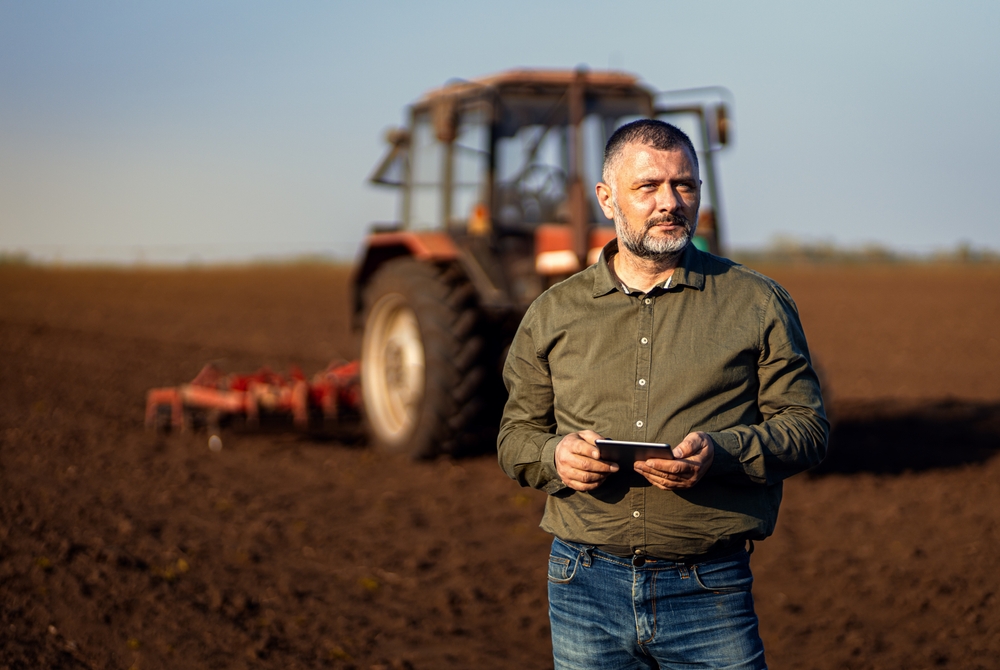
Agriculture has always been shaped by change. Weather, markets, technology, labor availability and consumer expectations all influence how food is produced and how agricultural businesses operate. What makes the current period particularly demanding is that many of these pressures are occurring at the same time. Farmers need to maintain productivity despite increasingly unpredictable conditions, while manufacturers of agricultural machinery must develop equipment that is more efficient, durable and technologically advanced. The result is an industry in which resilience, productivity and the ability to adapt have become just as important as traditional agricultural expertise.
Increasing productivity while controlling costs
One of the fundamental challenges throughout agriculture is producing more efficiently without allowing costs to rise at the same pace. For farmers, expenses associated with machinery, energy, labor, fertilizer, maintenance and other inputs all influence the economics of production. Manufacturers face similar pressures as they work to produce tractors, harvesters and other agricultural equipment efficiently while maintaining demanding standards for quality and reliability.
The performance of agricultural machinery is therefore an important part of the wider productivity equation. Companies such as Atlas Copco ITBA work with solutions for the production of agricultural and farming equipment, where assembly quality, process improvement and reduced production downtime are important considerations. Modern tractors and harvesters contain numerous critical components, and their reliability ultimately depends on consistent manufacturing and assembly processes.
For equipment manufacturers, improving productivity does not simply mean increasing production speed. An assembly line that runs faster but generates more defects can create additional costs through rework, interruptions and warranty issues. Efficiency instead depends on maintaining a stable process in which components are assembled correctly and consistently. This becomes especially important for critical connections involving engines, gearboxes, axles and chassis components, where quality and safety requirements are high.
The same principle applies on the farm. Productivity is not solely about harvesting more acres in a day or achieving the highest possible output from a particular field. The relationship between output and the resources needed to achieve it is equally important. Improvements in agricultural productivity can reduce the amount of input required for each unit of output, helping producers manage costs while maintaining production.
Technology therefore has an increasingly important role in controlling costs. Automation, data collection and digitally supported equipment can provide better visibility into processes and make it easier to identify inefficiencies. However, introducing technology also requires investment, skills and careful implementation. Simply adding more technology does not automatically create a more efficient operation. The real value comes when technology solves a specific operational problem.
Climate pressure and the management of natural resources
Agriculture depends directly on natural conditions in a way that few other industries do. Soil quality, water availability, rainfall and temperature influence agricultural production every season. Changes in these conditions can therefore have immediate consequences for yields and long-term consequences for the viability of agricultural land.
Water is one of the clearest examples. Agriculture must compete for a resource that is becoming increasingly constrained in many parts of the world. FAO has reported that billions of people live in agricultural areas affected by high or very high levels of water scarcity or shortages. For farmers operating in water-stressed regions, improving the efficiency of irrigation and water management is consequently both an environmental and an economic issue.
Soil presents another long-term challenge. Agricultural productivity relies on healthy, productive land, yet erosion and degradation can gradually reduce its capacity to support crops. FAO has highlighted the connection between soil degradation, water scarcity, biodiversity loss and declining agricultural productivity. Its 2025 State of Food and Agriculture report also estimated that around 1.7 billion people live in areas where crop yields are declining because of human-induced land degradation.
These pressures make resource management increasingly important. Farmers have to consider not only what produces the best result during the current season but also what allows land and water resources to remain productive over many years. Sustainable management of soil, land and water is therefore closely linked to long-term food production rather than being a separate environmental concern.
Climate variability adds another layer of complexity. Decisions regarding planting, irrigation, harvesting and machinery use are often dependent on conditions that cannot be controlled. When weather patterns become less predictable, agricultural businesses need greater flexibility. Equipment must perform reliably during limited operating windows, while farms may need to adapt crop choices, timing and resource use as conditions change.
For machinery manufacturers, these changes can also influence product development. Agricultural machines operate outdoors, often under dust, vibration, moisture, temperature fluctuations and heavy mechanical loads. Durability has always mattered, but increased pressure on farmers to make efficient use of every available working period makes equipment reliability even more valuable.
Labor shortages and the changing role of agricultural technology
Agriculture remains highly dependent on people, but finding and retaining sufficient labor can be difficult. The challenge varies considerably between regions and types of farming, yet labor shortages have become one of the factors encouraging greater interest in automation and digital agriculture. USDA research has specifically identified rising production costs, climate change and labor shortages among the challenges that digital agricultural technologies may help address.
Mechanization has been changing agricultural work for generations. Today’s development goes further because machines increasingly combine mechanical capability with sensors, software, positioning systems and data analysis. The operator is no longer simply controlling a machine. In many cases, the machine itself can provide information that helps operators make better decisions.
This creates opportunities to use labor more efficiently. Automated or digitally assisted systems can reduce repetitive tasks, improve consistency and allow skilled employees to focus on work where human judgment adds the greatest value. They may also help agricultural businesses maintain productivity when recruiting additional workers is difficult.
At the same time, greater technological sophistication creates a different labor challenge. Modern farming increasingly requires people who understand both traditional agricultural processes and advanced equipment. Operators need to be comfortable with digital interfaces, while technicians require the skills to diagnose machines that combine mechanical, electrical and software systems.
Training therefore becomes an important part of technological progress. A sophisticated machine offers limited value if employees cannot use its capabilities correctly or maintain it effectively. Agricultural companies must consequently think about technology and workforce development together.
The same change is taking place in agricultural equipment manufacturing. Automated assembly, smart tools and digital quality systems can provide greater process control, but manufacturers need employees who understand how these systems function. The transition toward more connected production environments changes both the factory floor and the skills required to operate it.
Building agricultural machinery for demanding operating conditions
The agricultural industry depends heavily on machinery, from relatively simple implements to highly sophisticated tractors and harvesters. These machines are expected to operate under conditions that would be challenging for many other types of industrial equipment.
A tractor may work for extended periods on uneven terrain while handling significant loads and vibration. Harvesting machinery must often operate during relatively short seasonal windows when delays can be costly. Equipment failure therefore has consequences beyond the immediate repair. Downtime can disrupt an entire chain of field operations.
This puts considerable pressure on agricultural equipment manufacturers. Quality has to be designed into both the product and the production process. Critical joints and components must be assembled consistently, and manufacturers need systems that minimize the risk of defects reaching completed machines.
The chassis illustrates the importance of this approach. Engines, transmissions, axles and other major components create demanding assembly applications where stability, safety and quality are essential. Atlas Copco identifies these areas as important parts of tractor assembly and emphasizes the relationship between reliable assembly processes, lower production downtime, process improvement and equipment durability.
Quality control also becomes increasingly important as machinery grows more complex. A modern agricultural machine may combine mechanical assemblies with electronic systems, sensors and software. A defect in one relatively small component can affect the performance of a much larger system.
Manufacturers therefore need production processes that are repeatable and traceable. Better information from the assembly process can make it easier to identify where problems occur and address them before they become larger quality issues. This is one reason data collection and integrated production systems are becoming increasingly relevant to industrial manufacturing.
Durability must also be balanced against other objectives. Customers expect machines to be productive and reliable, but there is also pressure to reduce energy consumption, improve ergonomics and incorporate new technology. Manufacturers consequently have to improve multiple aspects of machine performance without creating unnecessary complexity or cost.
Agriculture must adapt without losing sight of practical realities
The transformation of agriculture will not be driven by a single technology or solution. Farms differ enormously in size, geography, crops, climate, access to capital and workforce structure. A technology that creates substantial benefits in one operation may deliver little value in another.
Successful adaptation therefore requires practical decision-making. Investment should address identifiable problems, whether the objective is reducing downtime, improving resource efficiency, handling labor shortages or increasing production consistency. The same principle applies throughout the agricultural supply chain.
For farmers, this means evaluating new machinery and digital tools according to the value they create in everyday operations. Reliability, serviceability and usability may ultimately matter more than the number of advanced features available. Technology must work during the periods when the farm actually needs it.
Equipment manufacturers face a comparable challenge. Their customers operate in demanding environments and expect machinery to continue performing for long periods. Improving manufacturing quality, reducing production interruptions and developing durable products are therefore not isolated factory objectives. They directly affect how efficiently agricultural businesses can operate.
The future of agriculture will continue to involve uncertainty. Climate conditions will change, input costs will fluctuate, technology will develop and expectations surrounding sustainability will evolve. Yet the central requirement remains familiar: agriculture must produce reliably while using resources as effectively as possible.
Meeting that requirement increasingly depends on connections across the entire industry. Farmers, machinery manufacturers, technology suppliers and other specialists each influence the efficiency of agricultural production. Progress will come from combining agricultural knowledge with better equipment, stronger manufacturing processes and technology that solves practical problems rather than adding complexity for its own sake.
That balance is likely to define the agricultural industry’s ability to meet its major challenges. Productivity will remain essential, but productivity alone will not be enough. Farms and manufacturers must also become more resilient, resource-efficient and adaptable, ensuring that improvements made today continue to deliver value under the changing conditions of tomorrow.